






11 Hanuman Chalisa Benefits You Never Knew: The 2026 Guide to Spiritual Power on Hanuman Jayanti
Introduction
Hanuman Jayanti is a vibrant Hindu festival celebrating the birth of Lord Hanuman, revered as the epitome of strength, devotion, and selfless service. In 2026, this major festival will be observed on Wednesday, April 1st, corresponding to the full moon day (Purnima Tithi) of the Chaitra month in the Hindu lunar calendar. The Purnima Tithi begins at 9:36 PM on March 31 and concludes at 10:11 PM on April 1. (Note: some other panchangs list the date as April 2, 2026).
A central practice of this day is the recitation of the Hanuman Chalisa, a 40-verse devotional hymn composed in the 16th century by the poet-saint Goswami Tulsidas. It is believed that chanting this sacred text on Hanuman Jayanti amplifies its spiritual benefits, as the day is charged with the divine energy of Lord Hanuman’s birth. Devotees seek his blessings for protection, courage, and the removal of obstacles.
This guide will explore the significance of the Hanuman Chalisa, detail its multifaceted benefits, explain why chanting on Jayanti is especially powerful, and provide a complete framework for observance in 2026.
Understanding Hanuman Chalisa
The Hanuman Chalisa is more than a prayer; it’s a poetic biography that recounts the life, virtues, and heroic deeds of Lord Hanuman. Written by Goswami Tulsidas in Awadhi, a dialect of Hindi, it consists of 40 verses (chaupais) plus opening and closing couplets.
While its original composition is in Awadhi, it is widely available and recited in both Sanskrit and Hindi versions across the world. Devotees often learn it from childhood and incorporate it into daily worship.
Although it can be chanted at any time, certain periods are considered especially auspicious:
Tuesdays and Saturdays: Traditionally dedicated to Lord Hanuman.
Hanuman Jayanti: The most potent day for chanting.
Brahma Muhurat: The pre-dawn period (approximately 1.5 hours before sunrise). Chanting during this quiet, spiritually charged time is believed to yield the best results as the mind is calm and receptive. For Hanuman Jayanti 2026, Brahma Muhurat on April 1st falls between approximately 4:59 AM and 5:45 AM.
Spiritual Benefits of Chanting Hanuman Chalisa
Chanting the Hanuman Chalisa with devotion is believed to confer profound spiritual and psychological benefits.
A. Protection from Negative Energies
Lord Hanuman is known as “Sankat Mochan,” the remover of troubles. Reciting the Chalisa is said to create a protective spiritual shield around the devotee. It is traditionally used to ward off the evil eye, black magic, and negative spirits. The sacred vibrations of the verses purify the surroundings and foster a harmonious and positive aura.
B. Mental Peace and Clarity
In times of distress or anxiety, chanting the Hanuman Chalisa 4-5 times can instill a profound sense of calm and protection. The rhythmic, focused recitation helps reduce stress, anxiety, and depressive thoughts by anchoring the restless mind. This practice also improves concentration and focus, as it requires and cultivates single-pointed attention on the divine.
C. Strength and Courage
Hanuman is the embodiment of divine strength (bala) and valor. Chanting his glories helps devotees tap into inner reservoirs of confidence and resilience. It aids in overcoming fears and self-doubt, providing the mental fortitude to face life’s challenges. As Gurudev Sri Sri Ravi Shankar explains, Hanuman symbolizes the breath—when the soul and awareness take refuge in the breath, they can overcome all negativity.
Health and Wellness Benefits
The practice of chanting also offers tangible benefits for physical and mental well-being, supported by both tradition and emerging science.
Stress Reduction: The meditative, rhythmic nature of chanting helps lower blood pressure and reduce stress hormones like cortisol, promoting relaxation.
Respiratory and Immune Function: The controlled breathing involved in prolonged recitation can improve lung capacity and respiratory rhythm. A calm mind and reduced stress also contribute to a strengthened immune system.
Improved Sleep: By calming the nervous system and quieting a restless mind, regular chanting can be beneficial for those suffering from insomnia and sleep disorders.
Neurological Effects: Scientific studies on mantra chanting have shown it can induce a meditative state, similar to meditation, enhancing overall mental clarity and emotional balance. The repetitive sound vibrations are believed to have a stabilizing effect on the brain’s neural pathways.
Special Significance on Hanuman Jayanti 2026
Chanting the Hanuman Chalisa on Hanuman Jayanti is considered exceptionally potent. This day is not just a celebration but a powerful spiritual awakening, as the divine presence and energy of Lord Hanuman are believed to be most accessible.
Astrological Significance: Hanuman was born on Chaitra Purnima under a specific, auspicious celestial alignment that signifies divine purpose and strength. Performing devotion on this day aligns the devotee with these cosmic energies.
Multiplied Benefits: Merits and positive effects of spiritual practices are said to be magnified on sacred occasions. The collective energy of millions of devotees chanting together creates a powerful spiritual field.
Best Muhurat for Chanting: While chanting throughout the day is beneficial, the most recommended times are:
Brahma Muhurat (pre-dawn, approx. 4:59 AM – 5:45 AM on April 1).
Sunrise, as Hanuman is believed to have been born at sunrise.
Throughout the Purnima Tithi (from the evening of March 31 to the evening of April 1).
How to Chant for Maximum Benefits on Hanuman Jayanti
To fully receive the blessings of the day, follow these traditional guidelines for preparation and practice.
A. Preparation
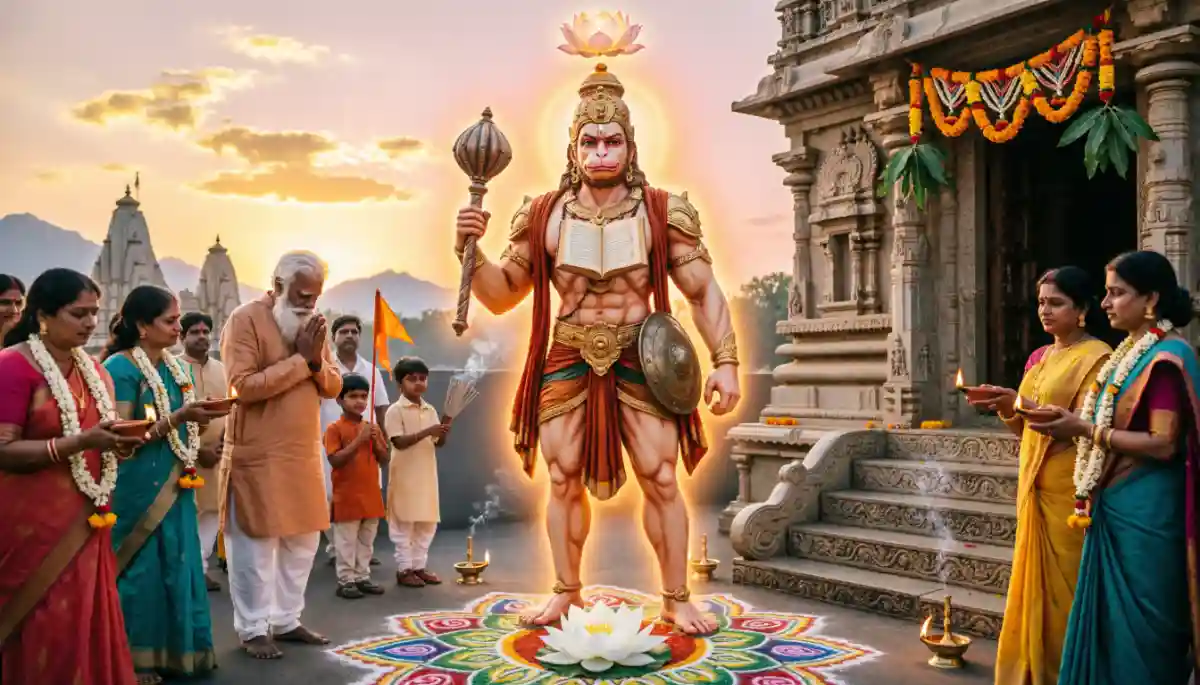
Cleanliness: Bathe and wear clean, preferably red or saffron-colored clothes, which are sacred to Hanuman.
Sacred Space: Clean your prayer area. Sit facing East or North.
Altar Setup: Place an idol or picture of Lord Hanuman on a clean cloth. Light a diya (lamp) with desi ghee or sesame oil and incense.
Offerings: Have offerings ready, such as red flowers, a sacred thread (janeu), and vermilion (sindoor) mixed with ghee or jasmine oil.
B. Chanting Guidelines
Begin with Invocation: Start by chanting “Om Shri Hanumate Namah” or “Shri Ram” 108 times to calm the mind and invoke a devotional mood.
Chant with Focus: Recite the Chalisa loudly and clearly, without rushing. Understand the meaning of the verses to deepen the connection.
Number of Repetitions: For Jayanti, devotees often aim for 108 repetitions, but 11, 21, or 41 cycles are also common and powerful.
Maintain Breath Awareness: Sync your chanting with natural, steady breaths to enhance concentration and meditative effects.
C. Common Mistakes to Avoid
Rushing Through Verses: Chanting hastily without feeling the devotion defeats the purpose.
Incorrect Pronunciation: Make an effort to learn the correct pronunciation to honor the sacred sounds.
Lack of Focus: Avoid distractions like phones or TVs. Be fully present.
Mechanical Recitation: Chant with heartfelt devotion (bhava), not just as a ritual.
Hanuman Jayanti 2026 Special Rituals
Beyond chanting the Chalisa, you can observe these traditional rituals on April 1st, 2026:
Fasting (Vrat): Many devotees observe a fast from sunrise to sunset. Options include a complete fast (nirjala), a fruit-and-milk fast (phalahar), or eating one satvik meal after the puja. Avoid tamasic foods like onion, garlic, and meat.
Temple Visit & Abhishek: Visit a Hanuman temple, perform or witness the abhishek (ritual bath) of the idol with Gangajal, and offer sindoor.
Charity (Daan): Donating on this day is considered highly meritorious. Donate food, clothes, or items in red color (like lentils, jaggery) to the needy or to temples.
Sundara Kanda Path: Reading or listening to the Sundara Kanda chapter of the Ramayana, which highlights Hanuman’s journey to Lanka, is a revered practice.
Community Service: Emulate Hanuman’s selfless service (seva) by helping others, perhaps by organizing or participating in a community meal (bhandara).
A Scientific and Spiritual Perspective
From a scientific viewpoint, the benefits of chanting stem from its effects on the autonomic nervous system. The rhythmic repetition induces a relaxation response, reducing the “fight-or-flight” mode. Neurological studies suggest mantra chanting can enhance neuroplasticity, improving focus and emotional regulation.
Spiritually, as expressed in the Hanuman Chalisa itself, sincere devotion is the key: “Mann Kram Vachan Dhyaan Jo Laave… Sankat Te Hanuman Churave” — “Whoever meditates upon Hanuman with thought, word, and deed… Hanuman liberates them from all crises”. The ultimate blessing is the cultivation of unwavering faith and inner strength.
#HanumanJayanti2026 #HanumanChalisa #HanumanJayanti #Bajrangbali #ChaitraPurnima #LordHanuman #SpiritualGrowth #JayShreeRam #HanumanBhakt #Devotion #SanatanDharma
Read More- Hanuman Jayanti Puja Rules



Post Comment