








Complete Guide to the Buddhist Panchsheel Flag: History, Meaning, Law & Modern Relevance
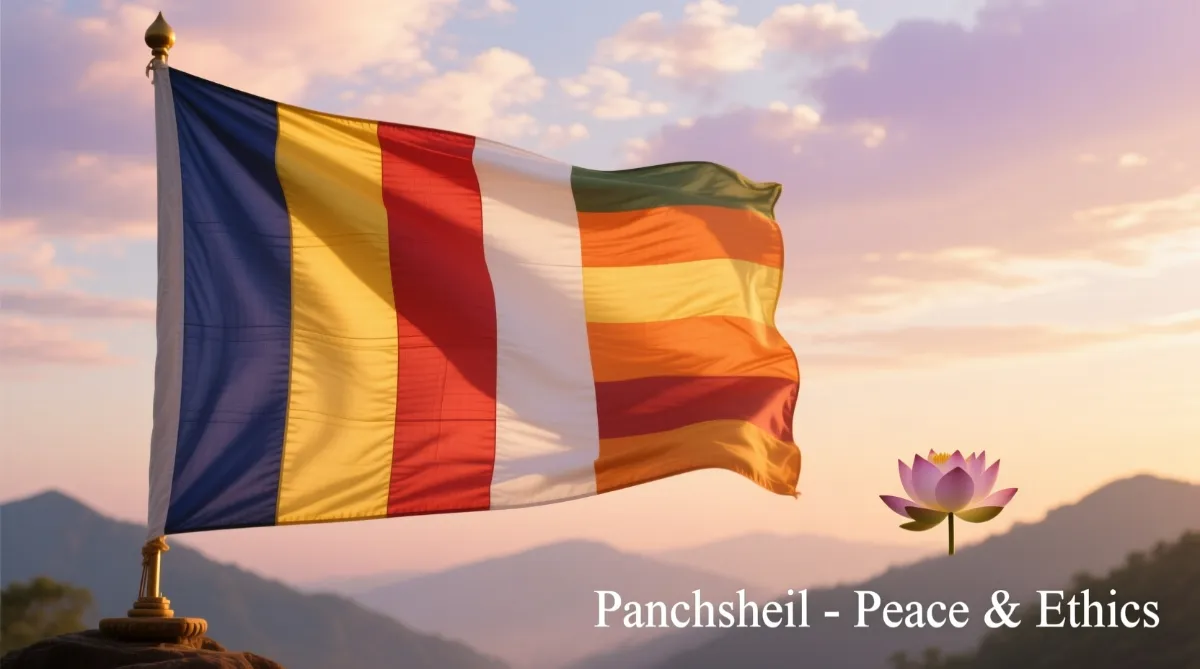
The Buddhist Panchsheel Flag, also known as the Bauddh Dhwaj (पंचशील ध्वज), is far more than a religious banner. It represents the ethical foundation of Buddhism, universal moral values, peace, equality, and human dignity. In today’s world—where conflicts, stress, and ethical confusion are widespread—the Panchsheel Flag has gained renewed relevance across education, law, governance, mental health, and social reform.
1. What Is the Buddhist Panchsheel Flag?
The Buddhist Panchsheel Flag is a symbolic representation of the Five Precepts (Panchsheel) taught by Gautama Buddha. These precepts form the moral code for lay Buddhists and guide individuals toward ethical living, compassion, and self-discipline.
The Five Panchsheel Principles
- Ahimsa – Abstaining from killing or violence
- Asteya – Abstaining from stealing
- Brahmacharya – Abstaining from sexual misconduct
- Satya – Abstaining from false speech
- Aparigraha – Abstaining from intoxicants and excess
The flag visually communicates these values, making it both spiritual and educational in nature.
2. Historical Origin of the Buddhist Flag

The modern Buddhist flag was formally designed in 1885 in Sri Lanka by Henry Steel Olcott, in collaboration with Buddhist monks. The objective was to create a universal symbol of Buddhism, similar to symbols used by other world religions.
Later, the flag was adopted internationally by the World Fellowship of Buddhists, making it a global emblem of Buddhist identity.
3. Meaning of the Buddhist Flag Colors

Each color of the Buddhist Panchsheel Flag represents a specific quality of enlightenment:
| Color | Meaning |
|---|---|
| Blue | Compassion and loving-kindness |
| Yellow | The Middle Path and freedom from materialism |
| Red | Spiritual power and blessings |
| White | Purity and liberation |
| Orange | Wisdom and discipline |
| Combined Stripe | Unity of all teachings |
Together, these colors symbolize the aura of enlightenment attained by the Buddha.
4. Panchsheel Flag vs National Flags
A common misconception is that the Buddhist flag competes with national symbols. In reality:
- The Buddhist Panchsheel Flag is a religious–ethical symbol
- National flags represent political sovereignty
- Both can coexist respectfully
In countries like India, the Constitution guarantees freedom of religion, allowing peaceful display of religious symbols.
5. Legal Status of the Buddhist Flag in India

Is the Buddhist Flag Legal in India?
Yes. Under Article 25 of the Indian Constitution:
- Citizens are free to profess, practice, and propagate religion
- Displaying religious flags is allowed as long as public order is maintained
Important Legal Points
- Allowed at homes, monasteries, religious events, and processions
- Not permitted to replace the national flag
- Must not incite hatred or violence
The Buddhist Panchsheel Flag is widely used during Buddha Jayanti, Ambedkar Jayanti, and social awareness programs.
6. Dr. B.R. Ambedkar and the Panchsheel Flag

B. R. Ambedkar embraced Buddhism in 1956 and emphasized Panchsheel as a tool for social justice and equality. In Navayana Buddhism, the flag symbolizes:
- Rejection of caste discrimination
- Commitment to rational ethics
- Human dignity and equality
Today, the Bauddh Dhwaj is a powerful symbol in Dalit Buddhist movements across India.
7. Role of the Panchsheel Flag in Education
The Buddhist Panchsheel Flag is increasingly used in:
- Moral science textbooks
- University philosophy courses
- Ethics and leadership programs
Why?
- Panchsheel aligns with modern human rights
- Encourages non-violence, truth, and responsibility
- Suitable for secular moral education
Many institutions study Panchsheel as a universal ethical framework, not just a religious one.
8. Panchsheel and Mental Health
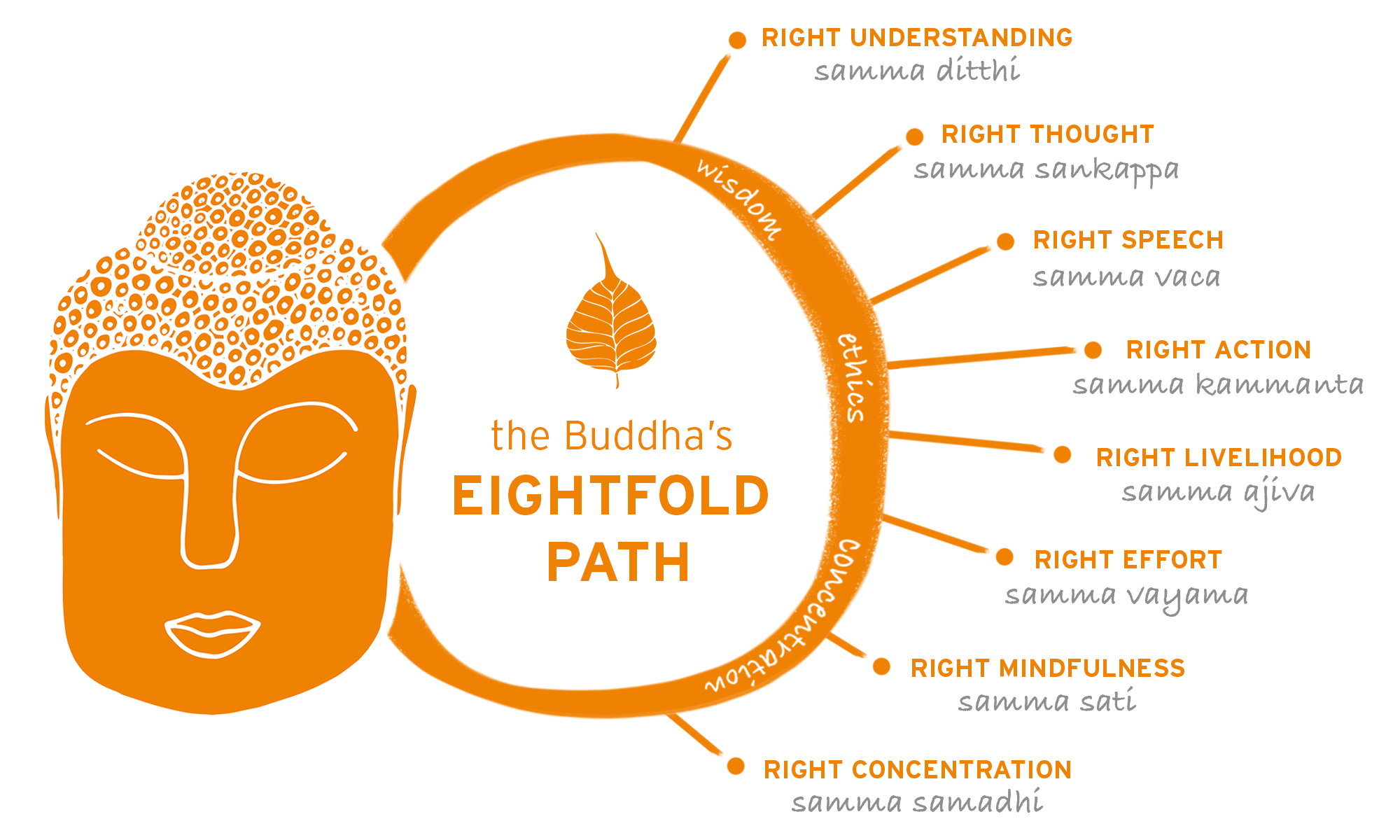

Modern psychology increasingly recognizes Buddhist ethics for mental well-being.
Benefits of Panchsheel for Mental Health
- Reduces guilt and anxiety
- Encourages mindful living
- Builds emotional discipline
- Promotes compassion over anger
The flag thus becomes a symbol of mindfulness, peace, and balance.
9. Global Presence of the Buddhist Flag

The Buddhist Panchsheel Flag is respected in:
- Sri Lanka
- Thailand
- Myanmar
- Japan
- Nepal
- India
It is commonly displayed at:
- International peace conferences
- UNESCO cultural events
- Buddhist monasteries worldwide
10. Modern Relevance of the Panchsheel Flag
In the 21st century, the Panchsheel Flag stands for:
- Peace in conflict-driven societies
- Ethics in corporate and political life
- Human rights and equality
- Environmental responsibility
- Mental and emotional well-being
As global interest in Buddhism, mindfulness, and ethical living grows, the Panchsheel Flag continues to gain importance beyond religion.
Frequently Asked Questions (FAQ) on the Buddhist Panchsheel Flag
1. Panchsheel Flag Colors Meaning – What Do the Colors Represent?
The Panchsheel (Buddhist) Flag has six vertical stripes, each with a deep philosophical meaning derived from the enlightenment of Gautama Buddha:
- Blue – Compassion, loving-kindness, and universal harmony
- Yellow – The Middle Path, wisdom, and freedom from attachment
- Red – Spiritual energy, strength, and blessings
- White – Purity, truth, and liberation from ignorance
- Orange – Discipline, renunciation, and deep wisdom
- Combined Colors – Unity of Buddha’s teachings and universal truth
Together, these colors symbolize the radiance (aura) of enlightenment.
2. What Is the Meaning of the Panchsheel Flag?
The Panchsheel Flag represents the Five Ethical Principles (Panchsheel) of Buddhism:
- Non-violence (Ahimsa)
- Non-stealing (Asteya)
- Moral conduct (Brahmacharya)
- Truthfulness (Satya)
- Avoiding intoxicants (Aparigraha)
The flag stands for ethical living, peace, equality, and self-discipline, making it relevant not only to Buddhists but to all humanity.
3. What Is the Buddhist Flag Meaning?
The Buddhist Flag is a global symbol of Buddhism, representing:
- The enlightenment of the Buddha
- Universal peace and non-violence
- Moral discipline and compassion
- Unity of Buddhists worldwide
It is not tied to any one country or political system and is respected across Asia and beyond.
4. Is the Buddhist Flag Allowed in India? (Buddhist Flag in India)
Yes. The Buddhist Flag is fully legal in India.
- Protected under Article 25 of the Indian Constitution (Freedom of Religion)
- Can be displayed at homes, monasteries, religious events, bikes, and peaceful processions
- Cannot replace or disrespect the Indian National Flag
It is commonly seen during Buddha Jayanti, Ambedkar Jayanti, and Buddhist gatherings.
5. What Is the Official Buddhist Flag Name?
The commonly accepted names are:
- Buddhist Flag
- International Buddhist Flag
- Bauddh Dhwaj (बौद्ध ध्वज)
- Panchsheel Flag (ethical interpretation)
All names refer to the same six-colored flag representing Buddhism worldwide.
6. What Is the International Buddhist Flag?
The International Buddhist Flag was designed in 1885 and later adopted globally by Buddhist organizations. It symbolizes:
- Unity of all Buddhist traditions (Theravāda, Mahāyāna, Vajrayāna)
- Peace beyond borders
- Common ethical values of humanity
It is displayed at international peace conferences, monasteries, and UNESCO cultural events.
7. Is There a Panchsheel Flag Emoji? (Panchshil Flag Emoji)
Currently, there is no official Unicode emoji specifically for the Panchsheel or Buddhist Flag.
However, people commonly use combinations like:
- 🕉️ ☸️ 🟦🟨🟥⬜🟧
- ☸️ (Dharma Wheel)
- 🕊️ (Peace symbol)
On social media, creators often use custom stickers, flags, or images instead of emojis.
8. Can We Use the Panchsheel Flag on a Bike? (Panchsheel Flag for Bike)
Yes, the Panchsheel Flag can be used on bikes legally and respectfully in India:
✅ Allowed:
- Small flag on handle or antenna
- Sticker or symbol on helmet or bike body
❌ Not Allowed:
- Obstructing number plates
- Disrespectful placement (dragging, torn flag)
- Using it for hate or political provocation
Many people use it to express peaceful identity, equality, and Buddhist values.
9. Is the Panchsheel Flag Only a Religious Symbol?
No. While rooted in Buddhism, the Panchsheel Flag represents universal ethics:
- Non-violence
- Truth
- Self-control
- Compassion
That’s why it is widely respected in education, social reform, mental health, and peace movements.
10. Why Is the Panchsheel Flag Relevant Today?
In modern times, the flag symbolizes:
- Peace in a conflict-driven world
- Ethical leadership
- Mental balance and mindfulness
- Social equality and human rights
It is increasingly viewed as a global moral symbol, not just a religious one.
#BuddhistFlag, #PanchsheelFlag, #BauddhDhwaj, #Buddhism, #Panchsheel, #BuddhistSymbols, #BuddhistEthics, #PeaceSymbol, #NonViolence, #Mindfulness, #BuddhaTeachings, #Dhamma, #NavayanaBuddhism, #Ambedkarite, #Equality, #HumanRights, #SpiritualIndia, #BuddhistIndia, #InternationalBuddhistFlag, #BuddhistCulture, #PeaceAndWisdom, #EthicalLiving, #BuddhistWayOfLife, #MentalPeace, #SymbolOfPeace
Read More –



Post Comment