






Morning vs Evening Puja on Hanuman Jayanti – Which Is Better?
Introduction
Hanuman Jayanti marks the divine birth of Lord Hanuman, the eternal symbol of strength, devotion, discipline, and protection. On this sacred occasion, devotees observe fasts, chant mantras, recite the Hanuman Chalisa, and perform special pujas to seek courage, success, and freedom from fear.
One of the most common questions devotees ask every year is about Hanuman Jayanti puja timing—
Should the puja be performed in the morning or in the evening?
This article provides a clear, traditional, and practical comparison of morning vs evening puja on Hanuman Jayanti, covering scriptural views, spiritual benefits, regional practices, astrological factors, and expert recommendations to help you make the right choice.
1. Traditional Scriptural Perspective on Hanuman Jayanti Puja Timing
Ancient Hindu traditions place great importance on time (kaal) in spiritual practices. According to classical scriptures, both morning and evening hold unique spiritual power.
Brahma Muhurta and Hanuman Worship
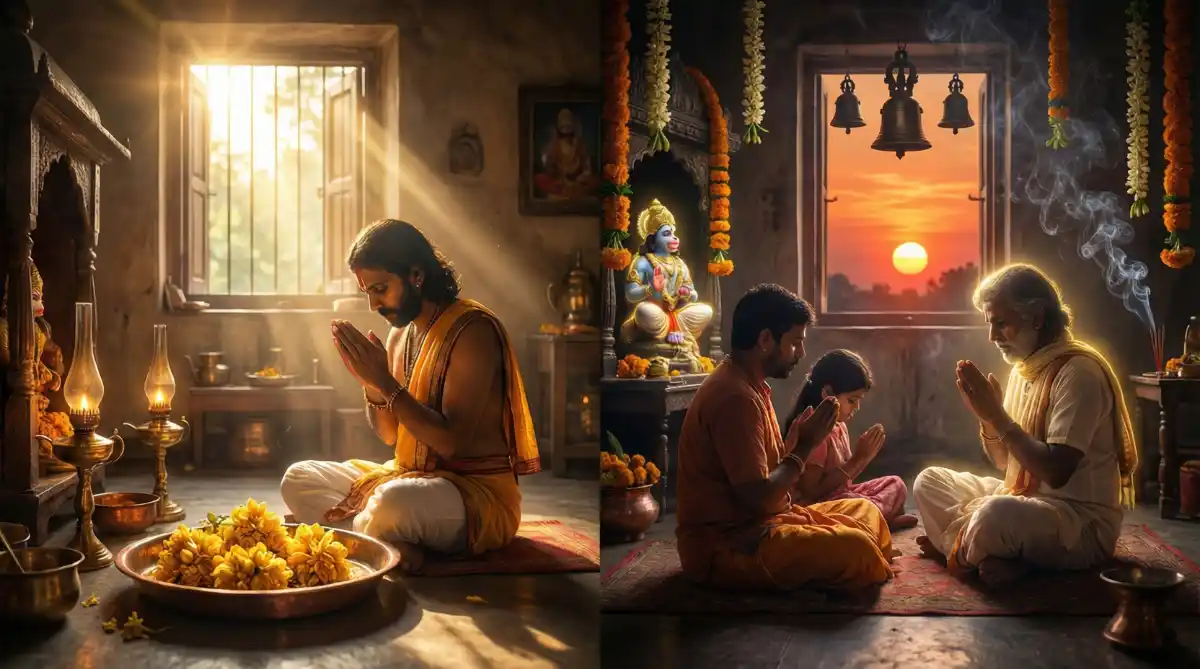
Brahma Muhurta (approximately 4:00 AM to 6:00 AM) is considered the most sattvic and spiritually charged time of the day.
Scriptures suggest that prayers offered during this period reach the deity faster due to minimal worldly disturbances.
Hanuman worship in the early morning is associated with discipline, celibacy, and unwavering devotion.
Evening Puja Traditions
Evening worship aligns with sandhya kaal, the transition from day to night.
Many regional traditions emphasize sunset prayers as a time of gratitude and surrender.
Temples often conduct aarti and collective chanting in the evening, especially on Hanuman Jayanti.
Scripturally, both timings are auspicious when performed with devotion and purity.
2. Morning Puja Benefits on Hanuman Jayanti
Spiritual Advantages
Fresh mind and pure thoughts enhance mantra effectiveness.
Brahma muhurta is believed to amplify spiritual energy and concentration.
Starting Hanuman Jayanti with puja sets a positive, disciplined tone for the entire day.
Ideal time for chanting Hanuman Chalisa, Bajrang Baan, and meditation.
Practical Benefits
Minimal noise and interruptions.
Better focus, especially for long chanting or japa.
Suitable for devotees observing nirjala or partial fasts.
Encourages consistency in daily spiritual routines.
Morning puja benefits on Hanuman Jayanti are especially powerful for individuals seeking inner strength, self-control, and mental clarity.
3. Evening Puja Benefits on Hanuman Jayanti
Spiritual Significance
Evening puja symbolizes gratitude for the day completed.
Lighting lamps at sunset represents removal of darkness and negativity.
Community-based worship enhances collective spiritual energy.
Ideal time for aarti, bhajans, and temple rituals.
Practical Advantages
Family members can participate together after daily responsibilities.
Allows for more elaborate rituals and decorations.
Convenient temple visits, as most temples host special evening aartis.
Suitable for devotees with work or study commitments.
Evening puja on Hanuman Jayanti is highly beneficial for those seeking family harmony, protection, and collective blessings.
4. Regional and Cultural Variations in Puja Timing
North India
Strong emphasis on early morning sindoor chadhana and oil abhishekam.
Akhand Hanuman Chalisa recitations often begin at dawn.
South India
Many temples perform special evening alankarams and deepa aradhana.
Coconut-based offerings are common in the evening.
Maharashtra and Gujarat
Both morning and evening pujas are popular.
Community processions and bhajans usually take place in the evening.
Hanuman Jayanti rituals timing often depends on local temple customs and community traditions.
5. Astrological Considerations for Hanuman Jayanti Puja
Astrology also plays a role in determining the best time to worship Hanuman.
Muhurat and Planetary Influence
Hanuman Jayanti often falls on Chaitra Purnima or Margashirsha Amavasya, depending on the region.
Worship during auspicious muhurat enhances spiritual outcomes.
If Brahma muhurta is unavailable, sunrise or sunset is recommended.
Astrologers emphasize that bhakti (devotion) matters more than exact timing, but auspicious hours can enhance focus and intent.
6. Personal Factors to Consider When Choosing Puja Timing
Lifestyle and Schedule
Morning puja suits disciplined early risers.
Evening puja works better for working professionals and students.
Family Participation
Evening puja allows greater family involvement.
Morning puja is often more solitary and meditative.
Health and Age
Elderly devotees may prefer shorter evening rituals.
Long fasting devotees often choose early morning worship.
Your personal comfort and consistency should guide the choice of Hanuman Jayanti puja timing.
7. Expert Recommendations on Puja Timing
Spiritual Gurus
Recommend morning puja for mantra sadhana and discipline.
Emphasize sincerity over rigid rules.
Temple Priests
Encourage devotees to align with temple aarti timings.
Suggest evening puja for community participation and blessings.
Balanced Approach
Modern spiritual guidance supports flexibility.
Devotion, cleanliness, and correct intent outweigh clock-based precision.
8. Making the Right Choice for You
Ask Yourself
When am I most calm and focused?
Can my family join the puja?
Will I maintain devotion without stress?
Combining Both
Morning: Hanuman Chalisa or japa.
Evening: Aarti and gratitude prayer.
Quality Over Timing
Pure devotion always surpasses perfect timing.
Even a simple puja performed with faith brings blessings.
#HanumanJayanti #MorningPuja #EveningPuja #HanumanWorship #HinduFestivals #Spirituality #DevotionalPractices #LordHanuman #PujaRituals #HinduTraditions



Post Comment