






New Labour Law 2025: Complete Guide to New Wage Rules, PF, Working Hours, Leave Policy & Compliance
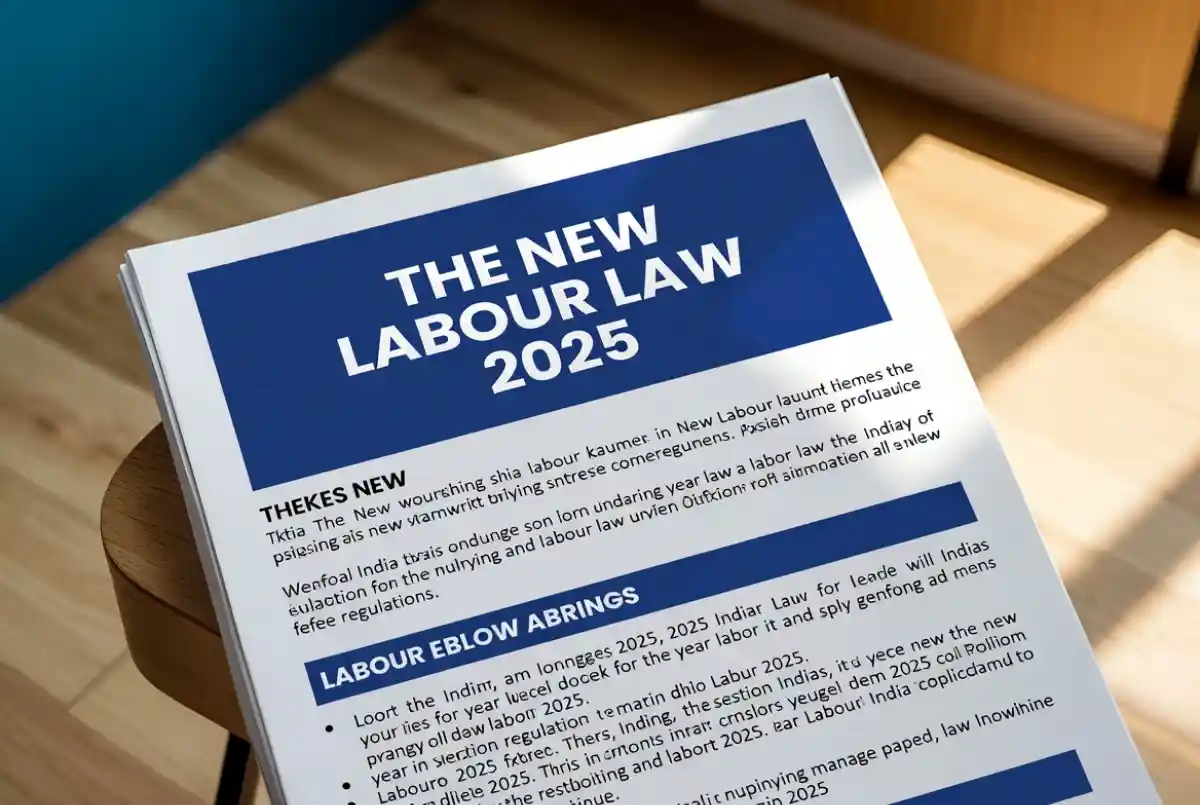
India is ready to enter a new era of employment reforms with the New Labour Law 2025, a unified labour framework that replaces 29 outdated laws and brings modern rules for wages, working hours, PF, safety, and employee rights. These reforms aim to make India’s workforce more efficient, safe, socially protected, and globally competitive.
This article covers every major update, including working hours, salary changes, PF contributions, employer obligations, leave rules, gig worker benefits, penalties, and 2025 implementation status.
Introduction – What Is the New Labour Law 2025?
The New Labour Law 2025 refers to the upcoming implementation of India’s four Labour Codes introduced between 2019 and 2020. These laws were created to:
- Bring uniformity in employment rules
- Simplify compliance for businesses
- Increase social security for workers
- Improve job safety and working conditions
- Support gig/platform economy workers
Once fully implemented, these laws will apply to all industries—private companies, factories, shops, startups, MSMEs, gig platforms, and service sectors.
Old Labour Laws vs New Labour Codes
Earlier, India had 29 different labour laws, all with different definitions, compliance requirements, and state variations. This caused confusion and uneven enforcement.
The government merged these into 4 Labour Codes:
- Wage Code, 2019
- Industrial Relations Code, 2020
- Social Security Code, 2020
- Occupational Safety, Health & Working Conditions (OSH) Code, 2020
These codes are designed to function as one harmonized employment system across India.
Four Labour Codes Explained (2025 Update)
Code on Wages, 2019
This code consolidates the following:
- Minimum Wages Act
- Payment of Wages Act
- Payment of Bonus Act
- Equal Remuneration Act
Key features:
- Same minimum wage rules across India
- 50% of total salary must be basic pay
- Overtime must be paid at twice the normal wage
- Gender-based pay discrimination prohibited
Industrial Relations Code, 2020
Regulates:
- Trade unions
- Strikes and lockouts
- Layoffs and retrenchments
Key features:
- Companies with up to 300 workers can hire/exit employees without government approval
- Mandatory 14-day notice before any strike
- Framework for collective bargaining and standing orders
Social Security Code, 2020
Integrates:
- PF
- ESIC
- Maternity benefits
- Gratuity
- Gig & platform worker protection
Key features:
- Gig workers included under social schemes
- Fixed-term employees eligible for gratuity
- ESIC expanded to more companies and sectors
- National Social Security Board for gig economy
OSH Code, 2020
Covers worker safety and working conditions.
Includes rules on:
- Working hours
- Women’s night shifts
- Contract labour
- Migrant workers
- Workplace safety audits
Key highlights:
- Safe work environment mandatory
- Free annual health check-ups
- Clean drinking water, toilets, first-aid room required
New Labour Law 2025 Implementation Status
Even though the labour codes were passed earlier, implementation requires both Central and State governments to finalize rules.
2025 Implementation Updates:
- Most states have prepared draft rules
- Few states have issued final notifications
- Central rules are ready
- Full implementation is expected in 2025 after all states complete their processes
- Once notified, the codes will become active across India in a single phase.
Major Changes Under New Labour Law 2025
New Working Hours System
The biggest change is flexibility.
- Option 1: 8 hours × 6 days
- Option 2: 12 hours × 4 days (4-day work week)
- Weekly limit fixed at 48 hours
- Compulsory 30-minute break every 5 hours
- No employee can be forced to choose a 12-hour shift
Salary Structure Rule – 50% Basic Pay
The new wage code mandates:
- 50% or more of the total salary must be basic pay
- Allowances must be less than 50%
Effect on employees:
- Take-home salary decreases
- PF contribution increases
- Gratuity increases
- Pension benefits improve
Before vs After Example:
| Component | Old System | New System |
|---|---|---|
| Basic Salary | 30% | 50%+ |
| PF Deduction | Lower | Higher |
| In-Hand Salary | Higher | Lower |
| Long-Term Savings | Lower | Higher |
Leave Rules Changes
- More annual leave for factory & service workers
- Carry-forward limit increased
- Encashment rules standardized
- Sick leave and casual leave flexibility
Overtime Rules (OT)
- OT must be paid at 2× normal wage
- Monthly OT maximum: 125 hours
- Digital record-keeping mandatory
PF, ESIC & Gratuity Under New Labour Law 2025
Provident Fund (PF)
- Basic salary increase → PF automatically increases
- Employer PF liability increases
- PF withdrawal conditions remain the same
- Pension will improve due to higher contributions
ESIC Benefits
ESIC will apply to:
- More shops and establishments
- Gig workers
- Platform-based delivery workers
- Fixed-term employees
Benefits include:
- Free medical care
- Maternity benefits
- Disability benefits
- Dependent pension
- Rehabilitation services
Gratuity Changes
Earlier: Only after 5 years of continuous service.
Now includes:
- Fixed-term employees
- Gig workers
- Platform workers
Even short contract employees may receive proportionate gratuity.
Impact on Employees
The new labour law brings major benefits but also some short-term drawbacks.
Positive Impact
- Better PF savings
- Strong social security net
- More annual leave
- Safer workplace
- Job security improvements
- Gig workers finally protected
Negative Impact
- Take-home salary reduces
- Longer shifts possible (optional)
- Mandatory digital tracking of attendance
Impact on Employers/Companies
Positive Impact
- Uniform rules across India
- Flexible hiring (fixed-term workers)
- Less paperwork due to digitization
- Ease of doing business improves
Challenges
- Higher PF contribution costs
- Stricter safety compliance
- Heavy penalties for violations
- Need to restructure salary components
Gig Workers & Platform Workers Benefits
This is the first time that:
- Delivery partners
- Cab drivers
- Freelancers
- Digital workers
- App-based service providers
…are covered under a national social security framework.
Benefits include:
- Insurance
- Maternity cover
- Pension contribution
- Health coverage under ESIC
- Accident benefits
Compliance Requirements for Companies (2025)
Mandatory Digital Records
Companies must maintain:
- Digital attendance
- Salary slips
- Working hours
- Leave records
- PF & ESIC filings
Single License for Multiple States
Businesses operating in multiple states can now apply for one unified license, reducing paperwork.
Workplace Safety Rules
- Fire safety equipment
- Emergency exits
- Clean toilets
- Separate facilities for women
- First-aid boxes
- Annual health check-ups
Penalties Under New Labour Law 2025
Wage-related violations
- Fines up to ₹1 lakh
- Up to 3 months imprisonment
PF/ESIC non-payment
- Fines up to ₹5 lakh
- Imprisonment for repeated defaults
Unsafe workplace penalties
- Large fines
- Work stoppage orders
- License suspension
The new labour codes have some of the strictest penalties in India’s employment history.
State-wise Implementation Status (Short Overview)
Most states have:
- Draft rules ready
- Sent rules for approval
- Awaiting final notification
Once the final notification is issued by both the Centre and States, the Codes become effective nationwide.
Benefits & Risks of New Labour Law 2025
Benefits
- More protection for workers
- Improved social security
- Uniform law for all states
- Transparency in wages
- Digital compliance reduces corruption
- Gig workers finally recognized
Risks
- Take-home salary dip
- Increased compliance cost for employers
- Small businesses need time to adapt
New Labour Law for Startups & MSMEs
- Simplified registration
- Self-certification for basic compliance
- Fewer inspections for honest businesses
- Flexibility in hiring project-based workers
- Lower dispute resolution time
FAQs (Frequently Asked Questions)
1. When will the New Labour Law 2025 start?
Implementation is expected in 2025, subject to final state notifications.
2. Will my take-home salary reduce?
Yes, because basic salary must be 50% of CTC, increasing PF contributions.
3. Can I be forced to work a 12-hour shift?
No. The 12-hour shift option is voluntary.
4. Are contract workers eligible for PF & gratuity?
Yes, contract and fixed-term employees get PF and even proportionate gratuity.
5. Are gig workers covered?
Yes. They will receive insurance, pension, and other social benefits.
6. What is the penalty for not paying overtime?
Companies must pay 2× wages or face heavy fines.
7. Will the 4-day work week be compulsory?
No. It is optional and depends on employer policy.
8. Can women work night shifts?
Yes, with safety arrangements and transport.
9. What is the weekly work limit?
48 hours per week across all industries.
10. Will PF withdrawal rules change?
PF withdrawal rules remain the same.