


Best Hanuman Flag for Home Rooftop: Ultimate Buying & Placement Guide
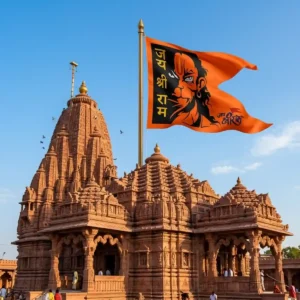
Flying a sacred Hanuman flag, also known as Hanuman Dhwaj or Bajrangbali Dhwaj, at home is a cherished devotional tradition for many Hindu families. The saffron-colored flag associated with Lord Hanuman symbolizes courage, strength, devotion, protection and victory.
If you are planning to install a Hanuman flag on your home rooftop or terrace, choosing the right material, size, stitching and attachment style is important. An outdoor flag must withstand sunlight, rain and strong winds while maintaining its appearance.
This complete guide explains how to choose the best Hanuman flag for your home rooftop, which materials are suitable for outdoor use, what features to check before buying, commonly followed Vastu considerations, and how to maintain your Hanuman Dhwaj.
Why Should You Fly a Hanuman Flag at Home?
A Hanuman flag for home has deep religious and cultural significance in Hindu tradition. Devotees associate Lord Hanuman with strength, fearlessness, devotion and protection.
1. Symbol of Lord Hanuman’s Strength
Lord Hanuman is traditionally regarded as a symbol of extraordinary strength, courage and determination. Displaying a Hanuman Dhwaj can serve as a daily reminder of these qualities.
2. Symbol of Devotion and Faith
A Bajrangbali flag displayed outside the home represents devotion toward Lord Hanuman and reverence for Sanatan traditions.
3. Associated With Protection
Many devotees believe that keeping a Hanuman flag at home creates a spiritually positive and protective atmosphere. These are religious beliefs and traditions, rather than scientifically established effects.
4. Symbol of Victory and Courage
The Hanuman Dhwaj is also associated with victory, confidence and overcoming difficulties, making it particularly meaningful for devotees.
What Is the Best Material for a Hanuman Flag?
The material of your Hanuman flag for rooftop use is one of the most important factors to consider.
Outdoor flags are exposed to:
- Strong sunlight
- Rain and humidity
- Dust
- Wind
- Pollution
- Frequent movement
For this reason, selecting an appropriate fabric can significantly improve the flag’s durability.
Satin Hanuman Flag
A good-quality satin Hanuman flag can be an attractive choice for outdoor devotional displays.
Satin fabric generally provides:
- Smooth appearance
- Bright color presentation
- Lightweight movement
- Attractive shine
- Good visual appeal
However, the actual durability depends on the fabric quality, thickness, stitching and printing method rather than the word “satin” alone.
Cotton Hanuman Flag
Cotton is traditionally popular for religious flags and offers a natural fabric option.
However, cotton can absorb moisture and may require more care when exposed continuously to rain and humidity.
For a rooftop flag that will remain outdoors for long periods, compare the fabric’s weather resistance and construction quality before purchasing.
7 Features to Look for in the Best Hanuman Flag
Before purchasing a Hanuman flag online, check these important features.
1. Durable Outdoor Fabric
Choose a fabric designed for outdoor use. The material should be lightweight enough to fly properly while being strong enough to handle repeated movement in the wind.
For a rooftop Hanuman Dhwaj, avoid extremely thin fabric that can tear easily.
2. High-Quality Hanuman Image Printing
The image of Lord Hanuman should remain clear and recognizable.
Look for:
- Sharp HD printing
- Strong color reproduction
- Clear facial details
- Good contrast
- Print suitable for outdoor use
A high-quality print also makes the flag more attractive when viewed from a distance.
3. Reinforced Border Stitching
The outer edges of a flag experience considerable stress because of continuous movement in the wind.
Look for:
- Double stitching
- Reinforced corners
- Strong edge finishing
- Durable thread
These features can help reduce premature fraying.
4. Golden Lace Border
A golden lace border can give a Hanuman flag a more traditional and premium appearance.
It is especially suitable for devotees looking for a decorative Bajrangbali Dhwaj for home.
5. Strong Flag Sleeve or Side Pocket
The attachment area should be strong because it transfers the wind load from the flag to the pole.
A properly constructed side sleeve or pocket makes installation easier and can reduce stress on the fabric.
6. Suitable Flag Size
The ideal size depends on your rooftop, pole height and surroundings.
Common choices include:
- Small Hanuman flags for home temples
- Medium flags for balconies and verandas
- Large flags for rooftops and terraces
Do not select an oversized flag simply because it looks impressive. The pole and mounting system should also be capable of safely supporting it.
7. Suitable Color
Saffron/Kesari is one of the most traditionally associated colors with Hanuman Dhwaj.
Red is also commonly used in Hanuman devotional symbolism.
Best Hanuman Flag Sizes for Home
Choosing the correct Hanuman flag size for your home depends on where you intend to install it.
| Flag Type | Recommended Use | Main Advantage |
|---|---|---|
| Small Hanuman Flag | Home temple | Compact and devotional |
| Medium Hanuman Flag | Balcony/Veranda | Easy to install |
| Large Hanuman Dhwaj | Terrace/Rooftop | High visibility |
| Extra-Large Dhwaj | Large properties | Strong visual presence |
For a typical residential rooftop, a medium or large flag with an appropriately sized pole can provide a good balance between visibility and practicality.
Best Hanuman Flag for Home Rooftop: What Should You Buy?
If your primary requirement is an outdoor rooftop flag, consider a configuration featuring:
Weather-suitable fabric + HD Hanuman print + reinforced stitching + strong sleeve + durable border finishing.
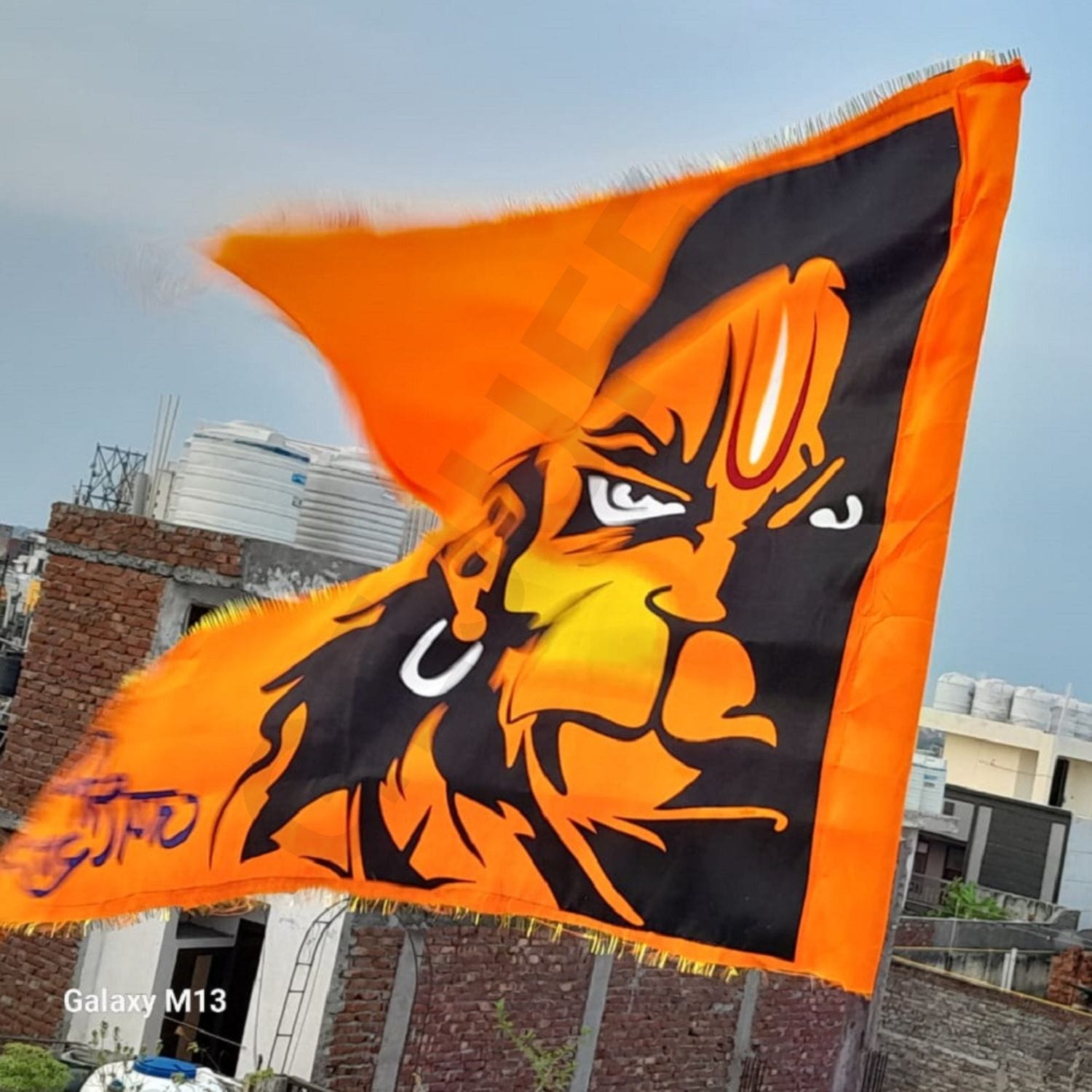
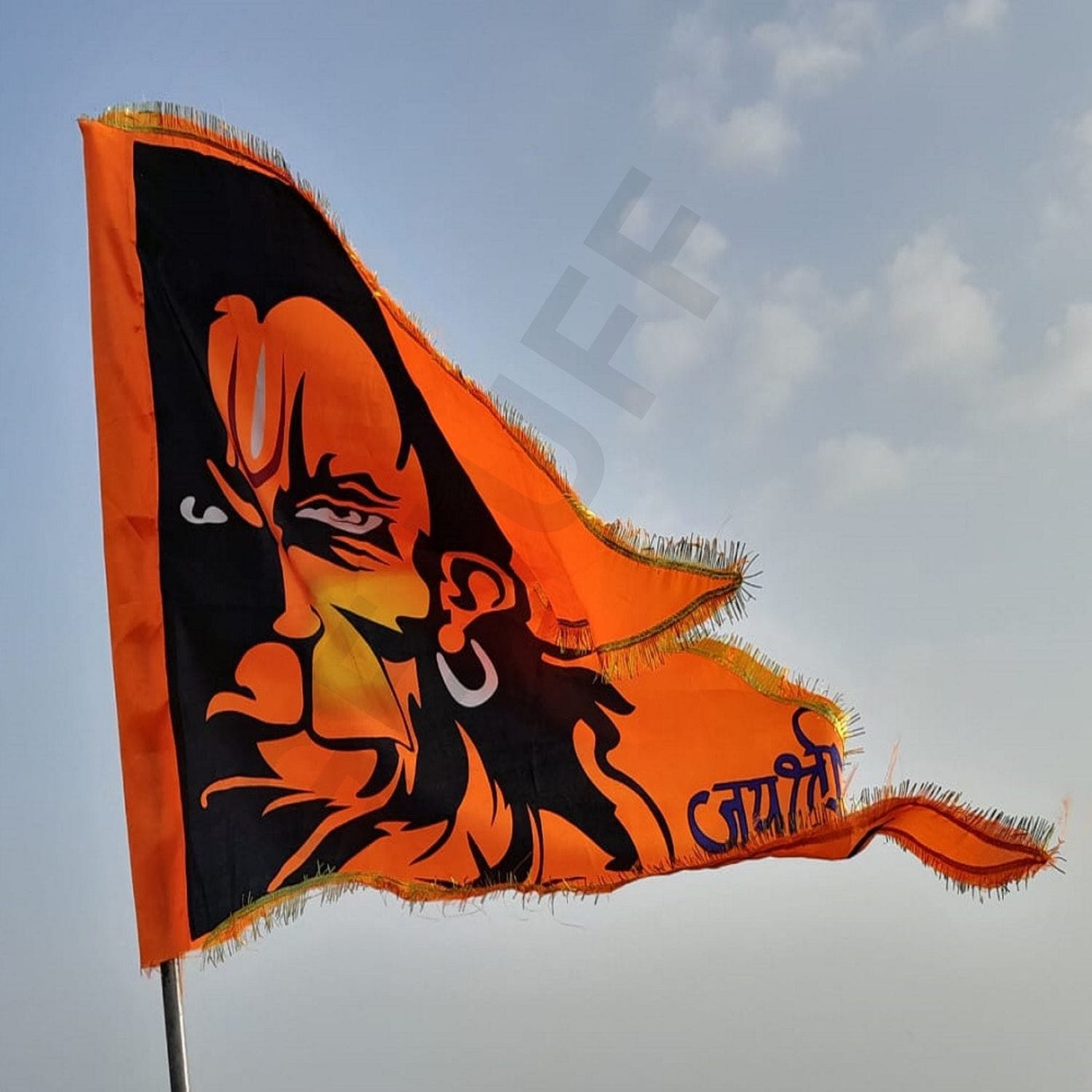
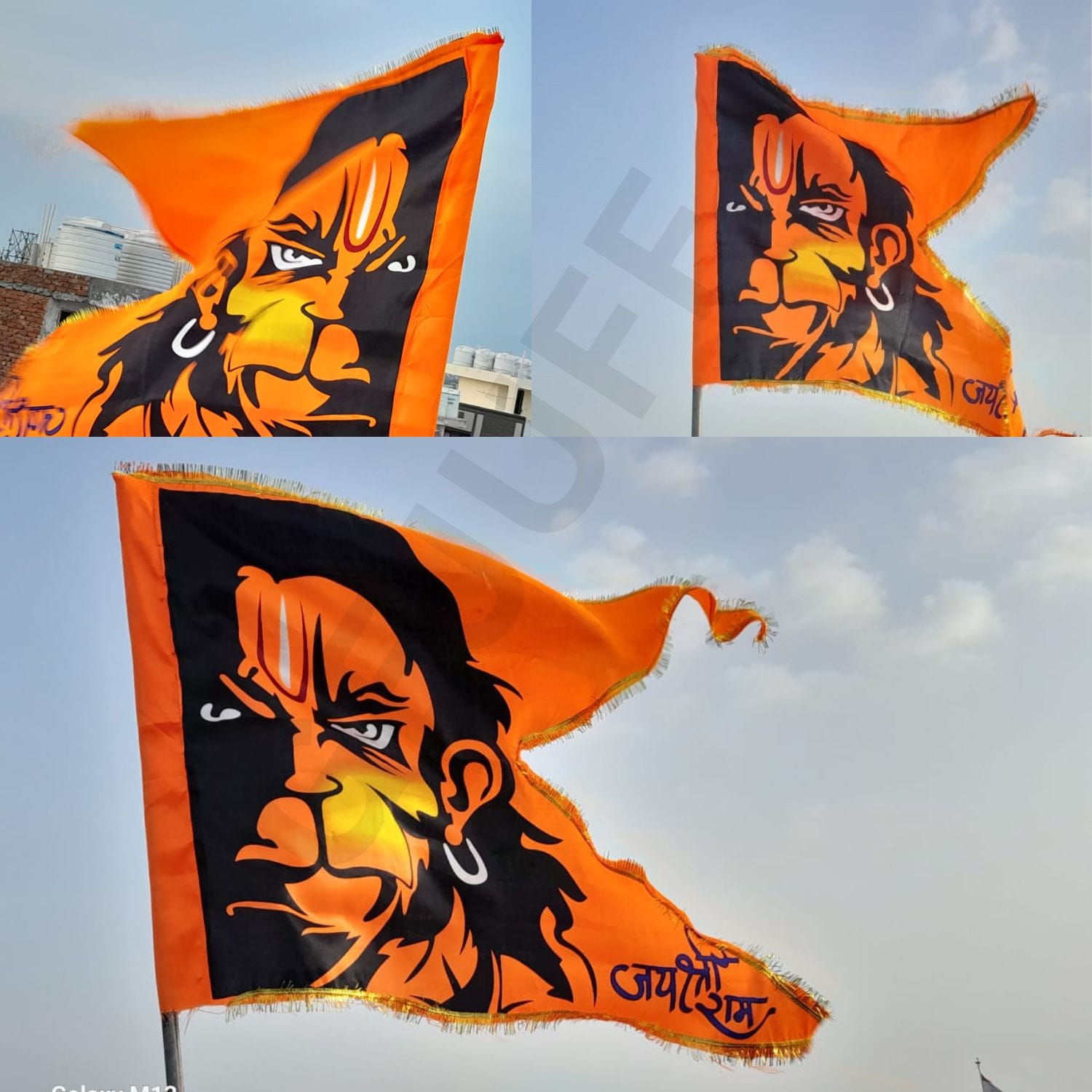
For devotees who prefer a premium appearance, a saffron satin Hanuman flag with golden lace border and detailed Hanuman artwork can be an attractive option.
The GEJUFF Premium Saffron Hanuman Flag can be positioned as an example of this type of product, particularly for customers looking for a devotional rooftop flag with a premium finish.
Hanuman Flag Vastu Direction for Home
One of the most frequently searched questions is:
Which Direction Should a Hanuman Flag Be Placed at Home?
Vastu-related recommendations can vary between practitioners and traditions. North-West (Vayu Kona) is commonly mentioned in discussions about Hanuman Dhwaj placement because of its association with the air element and movement.
Some traditions also recommend other directions depending on the home’s layout and specific Vastu considerations.
Therefore, rather than treating one direction as a universal rule, homeowners should consider their specific property layout and the Vastu tradition they follow.
Can Hanuman Flag Be Placed in the North-West Direction?
Yes, North-West is commonly recommended in some Vastu traditions for Hanuman Dhwaj placement.
The North-West direction is traditionally associated with Vayu, the deity of wind. Since Hanuman is traditionally known as Vayuputra, devotees may consider this symbolic connection meaningful.
However, Vastu recommendations differ, so this should be understood as a traditional belief rather than a scientifically established rule.
Hanuman Flag Placement Rules for Rooftop
When installing a Hanuman flag on your terrace, consider these practical and traditional points.
Keep the Flag Elevated
The flag should be mounted securely on a suitable pole and kept away from dirty or damp surfaces.
Use a Strong Pole
The pole should be appropriate for the flag’s size and local wind conditions.
Avoid Obstructions
Allow sufficient space for the flag to move freely without continuously hitting walls, trees, wires or other structures.
Keep the Flag Clean
A devotional flag should be treated respectfully and kept reasonably clean.
Replace Damaged Flags
If the flag becomes severely torn, excessively faded or otherwise damaged, replace it respectfully according to your family’s religious customs.
What Color Should a Hanuman Flag Be?
The most commonly associated colors are:
Saffron/Kesari
Saffron is strongly associated with Hindu religious traditions, renunciation and devotion.
Red
Red is also widely associated with Lord Hanuman and Hanuman worship.
For a traditional Bajrangbali flag, saffron is one of the most recognizable choices.
How High Should a Hanuman Flag Be?
There is no single universally applicable height for every home.
The correct height depends on:
- Rooftop structure
- Flag dimensions
- Pole strength
- Local wind conditions
- Building regulations
- Nearby electrical wires
- Safe installation requirements
The flag should be mounted securely and should not create a hazard for residents, neighbors or surrounding structures.
How to Maintain a Hanuman Flag?
Proper maintenance can help extend the useful life of your Hanuman Dhwaj.
Protect the Flag From Excessive Dirt
Regularly inspect the flag for dust, bird droppings and other debris.
Check the Stitching
Pay particular attention to:
- Corners
- Borders
- Sleeve
- Attachment points
These areas can experience greater stress.
Wash Carefully
If the manufacturer’s instructions permit washing, gently hand wash the flag using mild detergent and cool water.
Avoid:
- Harsh chemicals
- Bleach
- Aggressive scrubbing
- Excessive machine washing
Always follow the manufacturer’s care instructions because different fabrics and prints require different treatment.
Dry Properly
Allow the flag to air-dry naturally. Avoid unnecessarily exposing a wet flag to prolonged storage.
Single-Sided vs Double-Sided Hanuman Flag
Is a Double-Sided Hanuman Flag Better?
For a rooftop where the flag can rotate freely in the wind, double-sided printing can offer better visibility from different viewing angles.
Single-Sided Flag
Advantages:
- Usually lighter
- Potentially more economical
- Suitable for many basic installations
Double-Sided Flag
Advantages:
- Hanuman artwork can remain visible from both sides
- Better presentation when the flag rotates
- Suitable for prominent rooftop displays
The best choice depends on your budget, flag construction and intended installation.
Can We Keep a Hanuman Flag at Home Permanently?
Many Hindu families display religious flags at home for extended periods as part of their devotional practices.
There is no single universal rule applicable to every Hindu household regarding how many days a Hanuman flag must remain installed.
Families may choose to replace or renew their flag on auspicious occasions such as:
- Hanuman Jayanti
- Ram Navami
- Diwali
- Tuesdays
- Other family-specific religious occasions
Follow your family’s tradition or the guidance of your spiritual teacher if you have one.
Where Can You Buy a Hanuman Flag Online?
When buying a Hanuman flag online, do not select a product based only on the picture.
Before ordering, check:
- Fabric type
- Flag dimensions
- Printing quality
- Stitching
- Border finishing
- Sleeve/attachment design
- Customer reviews
- Product-care instructions
- Seller information
For rooftop use, durability and construction should be given priority over appearance alone.
Hanuman Flag Buying Checklist
Before purchasing your best Hanuman flag for home rooftop, use this checklist:
☑ Outdoor-suitable fabric
☑ Bright saffron or traditional color
☑ Clear Hanuman artwork
☑ Quality printing
☑ Reinforced stitching
☑ Strong corners
☑ Durable sleeve/pocket
☑ Suitable size
☑ Appropriate pole
☑ Weather considerations
☑ Easy maintenance
☑ Reliable seller
Frequently Asked Questions About Hanuman Flags
Which Hanuman flag is best for a home rooftop?
A good rooftop Hanuman flag should have durable outdoor-suitable fabric, quality printing, reinforced stitching and a strong attachment sleeve. Size should be selected according to the rooftop and pole.
Which direction is best for a Hanuman flag?
North-West is commonly recommended in some Vastu traditions, although recommendations can vary according to the practitioner and property layout.
Can I put a Hanuman flag on my terrace?
Yes, many devotees display a Hanuman Dhwaj on their terrace as part of their religious practice. Ensure the installation is structurally secure and does not create a safety hazard.
What color is best for a Hanuman flag?
Saffron/Kesari is one of the most traditional choices, while red is also commonly associated with Hanuman worship.
Is satin good for a Hanuman flag?
Quality satin can provide a bright, attractive appearance and lightweight movement. For outdoor use, however, evaluate the actual fabric quality, construction and weather suitability, rather than choosing based on fabric name alone.
Should a Hanuman flag be single-sided or double-sided?
For rooftops, double-sided printing can be useful because the flag may rotate in the wind and remain visible from different directions.
How often should a Hanuman flag be replaced?
There is no universal replacement period. Inspect it regularly and replace it when it becomes torn, heavily faded, damaged or excessively soiled, following your family’s religious customs for disposal or replacement.
Can a Hanuman flag be kept outside in rain?
Outdoor flags may be exposed to rain, but repeated moisture can affect different fabrics and prints differently. Choose a suitable outdoor fabric and follow the manufacturer’s care instructions.



Reviews
There are no reviews yet.